Modern Steel Structures for Commercial Projects
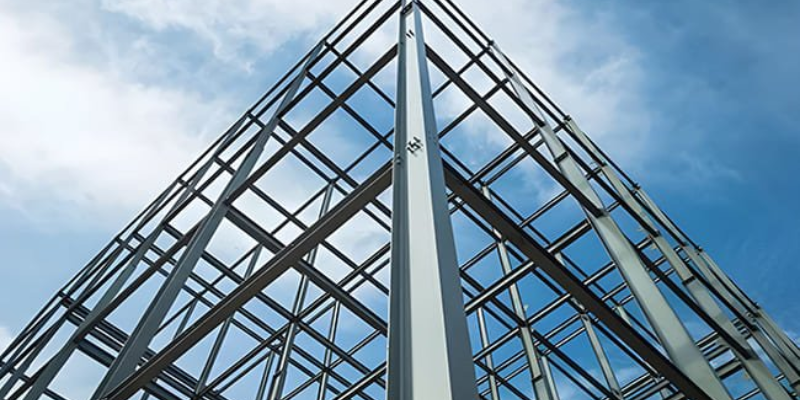
Modern Steel Structures for Commercial Projects: Why Steel Frame Buildings Are Leading the Way
Walk past almost any new commercial site in India right now and there's a good chance steel is holding it together. Steel Structure Construction has quietly become the default choice for builders, factory owners, and warehouse operators who are tired of waiting months for brick and cement to catch up with their timelines. It's not a trend that appeared overnight, and it's part of a bigger shift toward Modern Steel Construction across the country. Contractors switched because Steel Structure Construction genuinely solves problems that traditional methods never could: slow curing times, unpredictable labor availability, and costs that keep creeping up the longer a project drags on.
What Makes Steel Structure Construction Different
Old-school construction runs on wet trades. Brick gets laid, cement gets poured, and then everyone waits for it to cure before the next stage can even begin. Steel Structure Construction flips that sequence. Members are cut and shaped in a factory, then bolted or welded together once they arrive on site, so a huge chunk of the "waiting" disappears from the schedule entirely.
There's also a quality angle people don't talk about enough. When a beam is manufactured in a controlled factory environment, it comes out the same way every single time, with no weather delays, no inconsistent mixing, no guessing. That's a big part of why architects and structural engineers keep specifying Steel Structure Construction for warehouses, factories, showrooms, and even multi-story commercial complexes, and it's reshaping the structure of building construction across the industry.
Steel Frame Buildings: The Backbone of Commercial Projects
Nearly every modern commercial site you'll come across is built around Steel Frame Buildings. Instead of relying on thick load-bearing walls the way older structures did, this approach uses a skeleton of columns and beams to carry the load, which means the interior can stay wide open without a forest of support pillars getting in the way.
Retail showrooms, logistics hubs, and manufacturing units gravitate toward this style for a simple reason: the column-free layout can be reconfigured later without touching the core structure. Say your business grows in three years and you need a different floor plan. With Steel Frame Buildings, that's a realistic option instead of a demolition project.
PEB Steel Buildings: Speed Without Compromising Strength
Pre-engineered buildings, or PEB Steel Buildings, might be the fastest-growing category in this whole space, and it's easy to see why once you watch one go up. Almost the entire structure (columns, rafters, purlins, roof sheets) gets designed and cut at the factory long before anything reaches the actual site.
That upfront work pays off in a big way. Depending on the project, PEB Steel Buildings can shave 40 to 60 percent off a construction timeline compared to doing things the conventional way. For clients racing against a deadline, that alone is often reason enough to switch. There's also a cost benefit hiding in the design itself, since it's engineered for efficient steel usage rather than brute-force overbuilding, which keeps material costs down without sacrificing strength.
Steel Structure Warehouse: Purpose-Built for Storage and Logistics
Few building types benefit from this approach as directly as a steel structure warehouse does. Warehouses need three things at once: big clear-span areas for storage, the ability to handle heavy racking and machinery loads, and the toughness to survive years of weather without falling apart. Steel checks all three boxes without much compromise.
What's easy to overlook is how well a steel structure warehouse scales. Inventory grows, the business grows, and the building can be extended horizontally instead of forcing a costly rebuild, which is something concrete sheds rarely allow for. That flexibility is exactly why e-commerce companies, cold storage operators, and third-party logistics firms across India keep specifying steel over anything else.
Modern Steel Construction Techniques Shaping Commercial Sites
People hear "Modern Steel Construction" and picture beams being bolted together, but there's a lot more going on behind the scenes today. 3D structural modeling happens before fabrication even starts, CNC machines cut every member to a precise tolerance, and galvanized or painted coatings fight off corrosion for the life of the building.
The result is that Modern Steel Construction isn't really about speed alone anymore. It's about getting things right the first time. Every joint and connection gets planned digitally before a single piece of steel gets cut, which cuts down on-site errors dramatically and gives clients a building that behaves exactly the way it was engineered to.
Understanding the Structure of Building Construction in Steel
To really get why steel has taken over commercial projects, it helps to zoom out and look at the structure of building construction as a whole. In a conventional build, that process leans heavily on wet trades: masonry, plastering, curing, and every one of those steps is at the mercy of weather and seasonal labor.
A steel-based project flips that script. Foundations get cast once, and pretty much everything above ground level is dry, prefabricated work bolted into place. That single shift in the structure of building construction is why steel projects finish in a fraction of the time compared to traditional builds, with far less dependence on the weather cooperating.
Key Benefits of Choosing Steel for Commercial Construction
- Faster project completion — less on-site labor and shorter timelines thanks to factory-fabricated components.
- Lower long-term cost — better durability and efficient material usage mean less spent on upkeep down the line.
- Design flexibility — open, column-free interiors that can be reshaped or expanded whenever the business needs it.
- Better quality control — every component is manufactured to precise specs before it ever reaches the site.
- Sustainability — steel is recyclable, and pre-engineered systems generate a lot less construction waste.
- Weather and seismic resistance — steel structures hold up reliably under heavy wind, rain, and seismic loads.
Final Thoughts
Commercial construction keeps moving toward whatever is faster, more predictable, and built to last, and that's exactly what modern steel offers. Whether it's a large-scale storage facility, a flexible showroom raised on Steel Frame Buildings, or a fast-track factory built with PEB Steel Buildings, steel-based methods are reshaping how commercial projects get built across India. As Modern Steel Construction techniques keep improving and the structure of building construction keeps shifting toward prefabricated, precision-built systems, steel looks set to stay the material of choice for commercial builders for a long time to come.
Frequently Asked Questions
1. What is the typical lifespan of a modern steel commercial building?
With decent coatings and regular inspection, a well-built steel commercial structure can last 50 years or more, often needing less upkeep than a comparable concrete building over that same stretch.
2. Are PEB steel buildings suitable for multi-story commercial projects?
Yes. They're most common for single-story warehouses and factories, but the pre-engineered approach is increasingly being adapted for multi-story offices, showrooms, and mixed-use commercial buildings too.
3. How much faster is steel construction compared to conventional building methods?
It varies with project scale and design complexity, but steel-based construction typically runs 30 to 60 percent faster than traditional brick-and-cement construction.
4. Is a steel structure warehouse a good option for cold storage or heavy racking?
Yes. A steel structure warehouse is engineered to handle heavy point loads from racking systems, and it can be insulated effectively for cold storage or temperature-controlled use.
5. Does steel construction cost more than traditional construction?
Not usually, once you factor in the full picture. Initial material costs can land in the same range, but lower labor time, less maintenance, and longer durability tend to make steel the more cost-effective option over the life of the building.